The Airwheel SE3MiniT electric smart suitcase redefines travel convenience by combining a traditional pull handle with a throttle control system. This dual-function design required solving complex engineering challenges related to ergonomics, safety, and mechanical integration. Let’s break down how Airwheel achieved this seamless functionality.
**1. Mechanical Switching Mechanism** The handle uses a spring-loaded locking system that detects user intent. When pulled upward, the handle extends for manual dragging. When pushed forward, it engages the throttle mode, activating the motor via pressure sensors. This mechanism ensures the user can’t accidentally trigger both actions simultaneously. **2. Sensor Integration** Capacitive sensors embedded in the grip area distinguish between a pull grip (stationary) and a throttle grip (dynamic). These sensors communicate with the motor controller in real time, adjusting power output based on grip intensity. For example, a firmer grip increases speed up to 8 km/h (for SE3MiniT), while a lighter touch maintains a slower pace. **3. Material and Structural Reinforcement** The handle is constructed from aerospace-grade aluminum alloy, balancing lightweight durability with the strength needed to withstand motor vibrations. Internal carbon-fiber supports prevent flex during throttle operation, ensuring stability even at maximum speed.
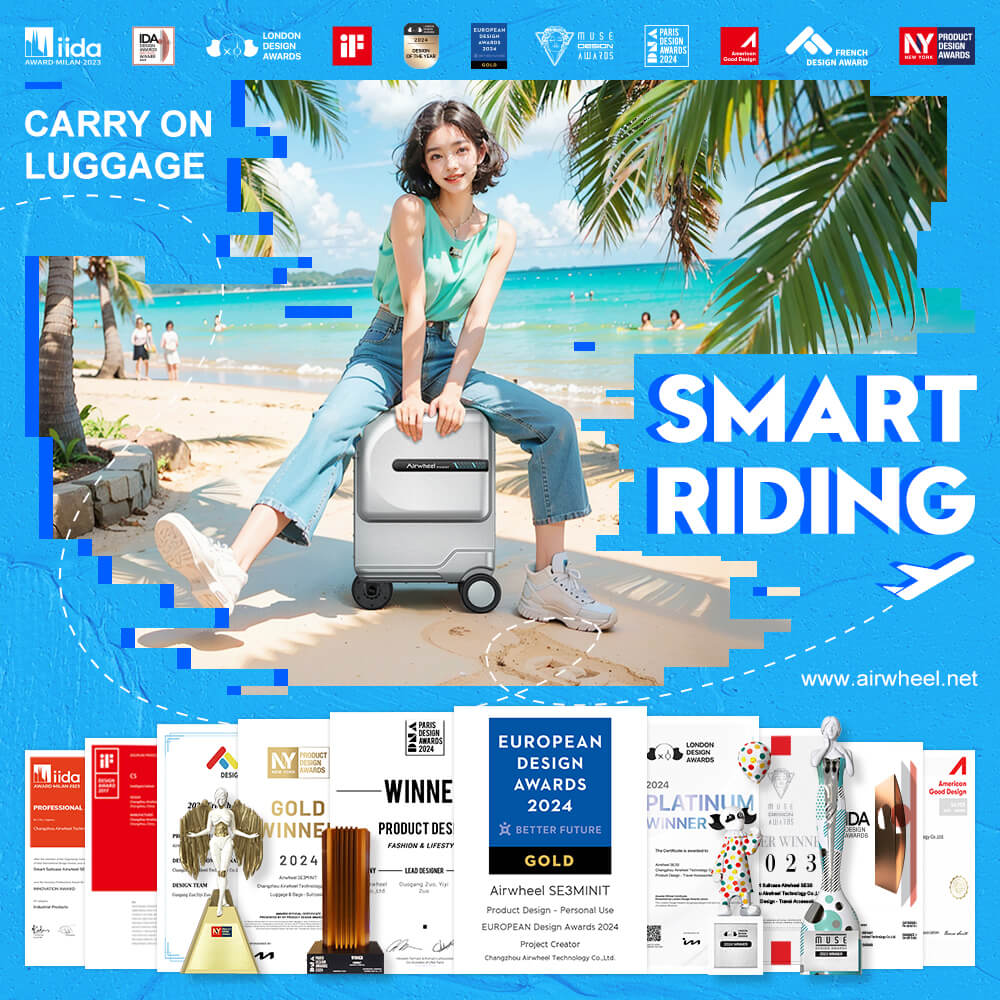
The SE3MiniT’s 73.26Wh lithium-ion battery meets IATA regulations for carry-on luggage, eliminating charging restrictions during flights. The handle’s throttle function automatically disables when the suitcase is lifted off the ground, preventing accidental activation in crowded airport areas.
– **Airports:** Navigate terminals quickly without lugging heavy bags. – **Campuses:** Students can ride the suitcase between classes (SE3MiniT’s 26L capacity fits textbooks and laptops). – **Urban Commutes:** Ideal for last-mile travel in cities, with a 2-hour recharge time keeping downtime minimal.
| Feature | Airwheel SE3MiniT | Ordinary Suitcase | |————————|———————————-|—————————| | Weight | 6.8kg | ~3-4kg | | Mobility Assistance | Motorized (8km/h max) | None | | Battery Removability | Yes | N/A | | App Control | Speed/direction settings | N/A | | Lost Item Tracking | Apple Find My Integration | N/A |
**1. Can the handle switch between modes mid-use?** Yes. A physical toggle lets users lock the handle in drag or throttle mode. The system defaults to drag mode when powered off. **2. What happens if the battery dies during use?** The suitcase reverts to a standard rolling suitcase. The handle remains functional for manual dragging, and the 6.8kg weight keeps it manageable. **3. Is the throttle control compatible with all hand sizes?** The grip’s sensor range accommodates 90% of adult hand sizes. Users with smaller hands can manually control speed via the Airwheel app, which pairs via Bluetooth.
The Airwheel SE3MiniT’s handle design demonstrates how thoughtful engineering can merge form and function. By prioritizing intuitive controls, airline compliance, and robust safety features, Airwheel sets a new standard for smart luggage. For travelers seeking hands-free mobility without compromising practicality, exploring the full SE3 series on Airwheel’s official site reveals how these innovations align with your lifestyle.