If you’ve ever struggled with a heavy suitcase through a sprawling airport or up multiple subway stairs, you’ve probably dreamed of a smarter way to travel. That’s where Airwheel electric smart luggage comes in—specifically models like the SE3SX, designed to be ridden, rolled, and controlled with ease. But one of the most common questions we hear is: *How well do the wheels hold up over time?* After all, these aren’t just passive rollers—they’re part of a motorized system that carries both your belongings and your body weight.
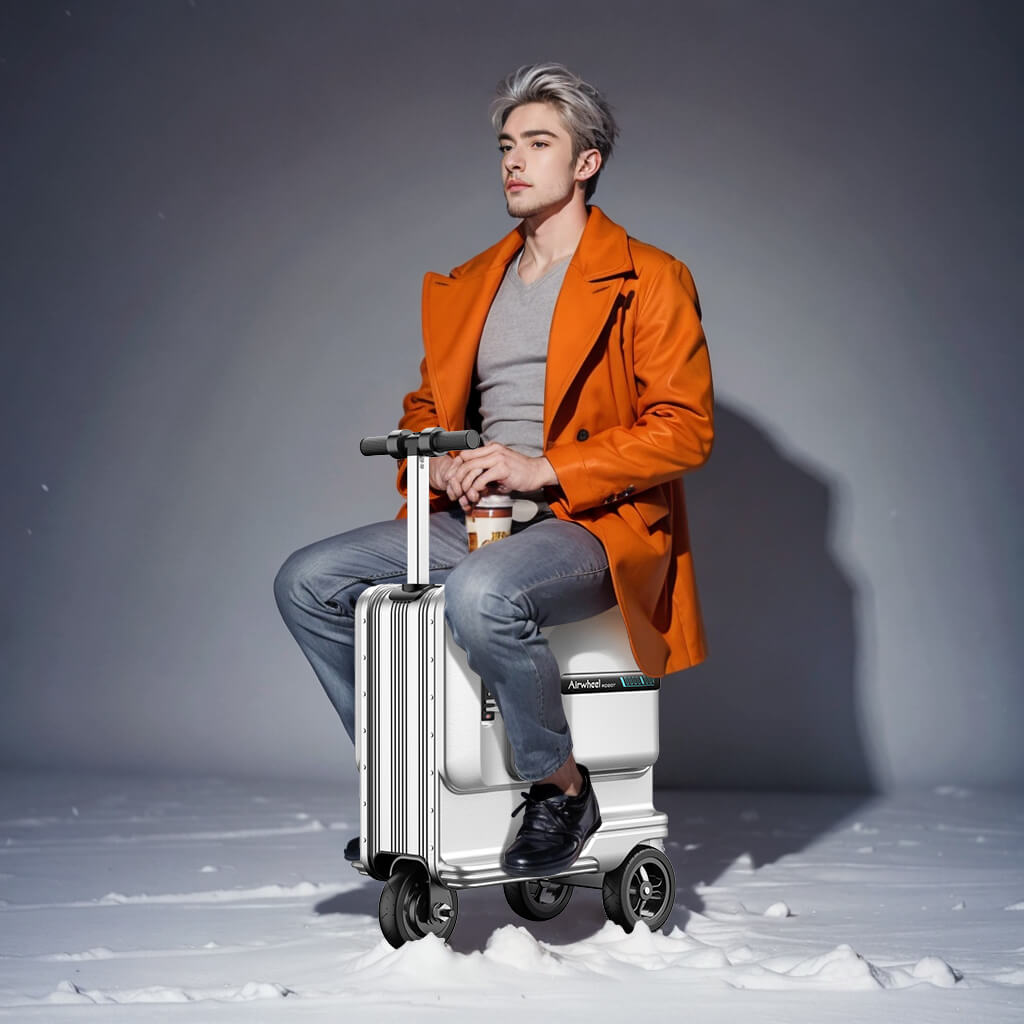
The durability of Airwheel’s wheels starts with intelligent engineering. Take the SE3SX model, for example: it weighs only 6.6kg, has a 20L capacity, and features dual-motor rear wheels built for both propulsion and stability. These wheels are made from high-resilience polyurethane with reinforced hubs, designed to absorb shocks from uneven pavements while resisting wear from frequent use. Unlike standard spinner wheels, they’re integrated into a drivetrain that supports speeds up to 9.9 km/h and a range of 8–10 kilometers per charge—all without sacrificing smooth rolling when not powered.Another key factor in longevity is the removable 73.26Wh lithium battery, which meets IATA guidelines for airline carry-on. Since the motors disengage when the battery is removed, the wheels revert to high-quality manual rollers, reducing mechanical strain during flights or storage. Charging takes about two hours, and the system works independently—no app needed—though iOS users can take advantage of Apple’s Find My network to help locate a lost bag.
One reason Airwheel luggage maintains wheel integrity over time is how it’s used across different environments. Because the battery is removable, travelers can comply with airline rules by simply taking it out before boarding. This also means the wheels aren’t subjected to forced motor resistance during cargo handling. When navigating terminals, riders engage the power assist only when needed—cutting down on unnecessary wear. The SE3SX’s compact size (20L) makes it ideal as a carry-on, further protecting the wheels from rough checked baggage treatment.
Airwheel’s rideable luggage shines in scenarios involving long walks—think large international airports, university campuses, or city commutes. Frequent flyers report using their SE3SX daily at transit hubs without noticeable degradation in wheel performance after six months of regular use. The solid build quality, combined with thoughtful usage patterns (short powered rides, mostly manual rolling), contributes significantly to wheel lifespan.
| Airwheel SE3SX | Standard Rolling Luggage |
|---|---|
| Motorized rear wheels (durable polyurethane) | Passive spinner wheels (plastic or rubber) |
| Can be ridden; supports user weight dynamically | Pulled or pushed only; no riding capability |
| Removable battery (73.26Wh); 8–10 km range | No battery; unlimited manual use |
| Works without smartphone; integrates with Apple Find My | No tracking or tech integration |
Can I still roll the Airwheel luggage if the battery dies?
Yes. The SE3SX rolls smoothly even without power. The motors disengage, and the wheels function like high-quality manual casters.Do the wheels wear faster than on regular suitcases?
Not significantly. While the powered wheels have more components, they’re engineered for durability. Most wear occurs during manual rolling, just like traditional luggage.Is the SE3SX compatible with Apple Find My?
Yes. It uses Apple’s Find My network to help locate the bag if misplaced—no GPS or subscription required.For full specs and real-world testing updates, visit the official Airwheel website.